
On field research, water subsidies, and the distance between policy and what I found on the ground in São Paulo.
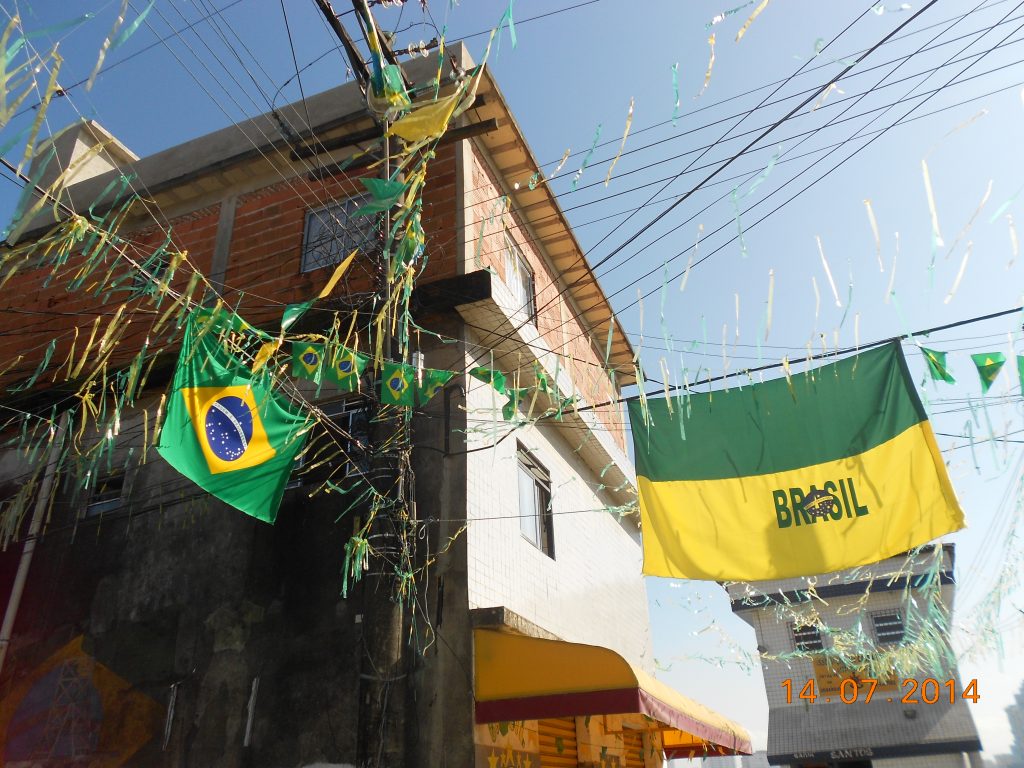
There is a particular kind of knowledge that comes only from the field – from walking across makeshift wooden bridges above contaminated water to knock on doors and ask people about their water bills. The water came from SABESP, São Paulo’s state water and sanitation utility.
In 2014, my graduate research at the University of Amsterdam took me into São Paulo state to answer one question: were water and sanitation subsidies reaching the low-income communities they were designed for? The answer was no. But it took months of fieldwork to understand why – and what that gap revealed about how systems function when held against the standards they claim to uphold.
In 2014, São Paulo state held about 22% of Brazil’s population and just 1.6% of its water resources, in a country where the Gini coefficient stood at 52.0 – among the highest levels of income inequality in the world. SABESP served over 26 million people, publicly listed and mandated to universalize access for the poorest at the same time. To bridge that tension, it built a subsidy into its tariff rather than relying on government transfers: higher-income consumers paid above cost, funding discounted rates for low-income households – a self-sustaining cross-subsidy. In practice, almost nobody was paying the tariff that matched their actual socio-economic conditions.
Santa Cruz dos Navegantes, a neighborhood in the municipality of Guarujá, does not feel like it belongs to the same city. Surrounded by ocean, reachable only after a long journey by road and water. Streets gave way to wooden bridges connecting stilt houses built directly over the water. Underneath those houses, drinking water pipes and wastewater ran parallel to each other, sometimes crossing.
I walked those fragile wooden bridges from house to house – some with holes wide enough that I still don’t know how people carrying babies crossed them safely – knocking on doors and asking whoever answered how much they paid for water each month. What I found was a tariff landscape bearing almost no relationship to the socio- economic reality of the people living in it.
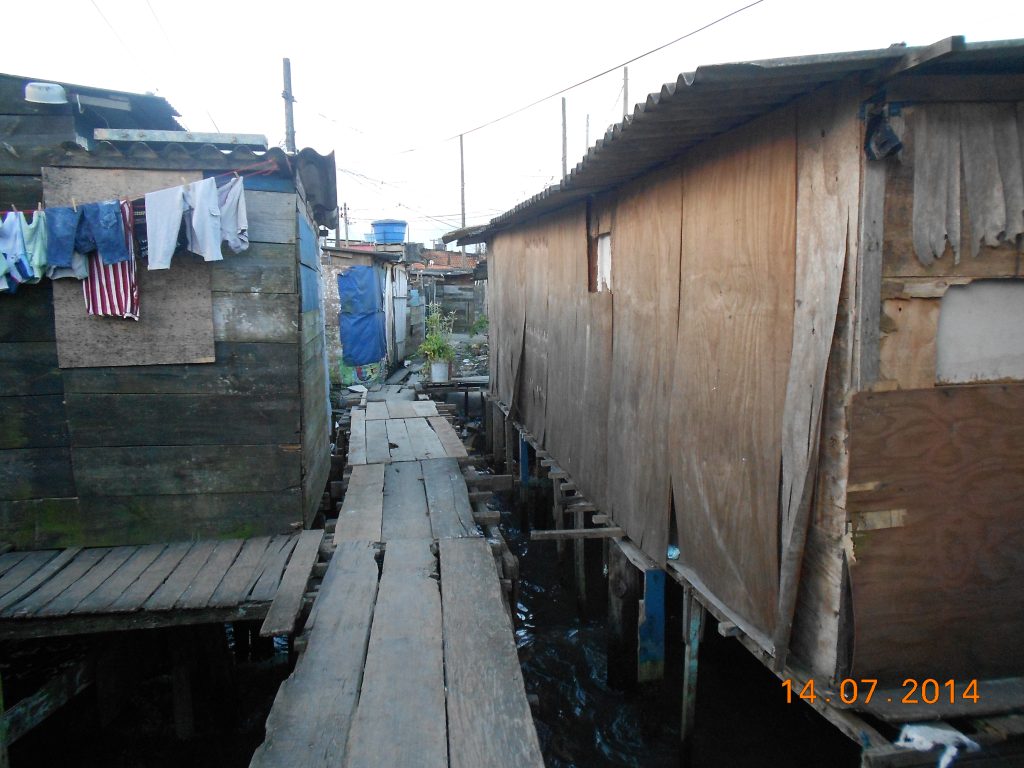
Predominance of stilt houses in Santa Cruz dos Navegantes and Prainha. Author.
Families in stilt houses were registered under the normal residential tariff. A public daycare center was paying a residential rate, never registered as a public institution. Wealthier-looking houses nearby had residents on the social tariff – not because they qualified, but because no one had verified the allocation in years. Across the sample I reviewed, the verification rate was effectively zero: not low, not inconsistent – absent as a function of the system entirely.
The subsidies existed. The legal framework existed. The mechanism existed. What did not exist was the infrastructure to ensure that any of it was being applied correctly.
At the time of my research, approximately 90% of SABESP’s residential users were receiving some form of subsidy. That sounds like a success – until you look closer. Only 3% were registered under the social tariff specifically designed for low-income households, while low-income groups represented around 20% of the population. The subsidy was reaching almost everyone – and therefore, in practice, no one in particular.

What struck me most was something ARSESP, the regulatory agency, said plainly in one of my interviews: that responsibility for the subsidy should sit with the state. Instead, it had become embedded in a tariff structure designed by a company that also operates under shareholder return obligations – public mission and private accountability, woven into the same number on a bill.
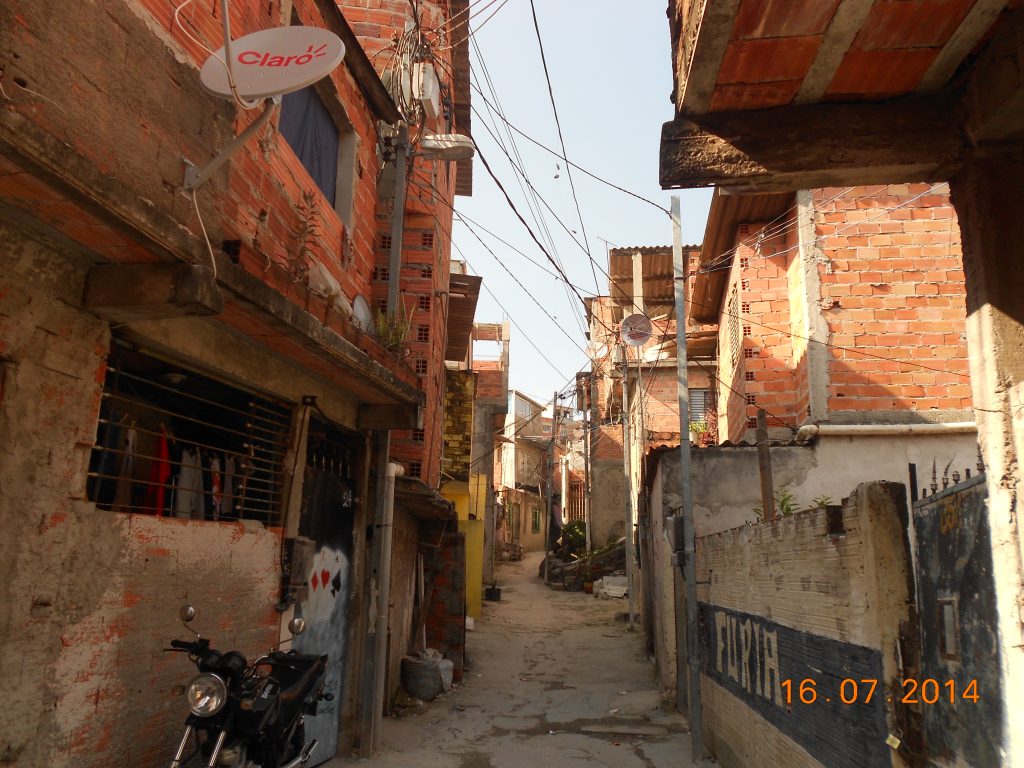
The streets in the Pedreira neighborhood
When I asked SABESP’s geographic information department to map the Paulista Index of Social Vulnerability against tariff subsidy allocations, the analysts were surprised by what they found. Favela tariff connections appeared outside recognized favela zones. Social tariff registrations did not correlate with the vulnerability index. And for the entire Metropolitan Region of Santos – including Santa Cruz dos Navegantes – no equivalent map existed at all. SABESP did not have the data.
The absence of the map was itself a finding. Coverage statistics showed 99% water access in the Greater Metropolitan Area – technically accurate and practically misleading. They counted connections. Not what kind, at what tariff, verified by whom, last audited when. For an entire region – the Metropolitan Region of Santos, including Santa Cruz dos Navegantes – that verification infrastructure didn’t just fail. It didn’t exist. This is where a development lens and a systems lens converge: knowing who a policy is meant to serve is only half the picture. Building the baseline, the KPI, and the audit cadence that would catch this gap before a researcher has to find it by boat
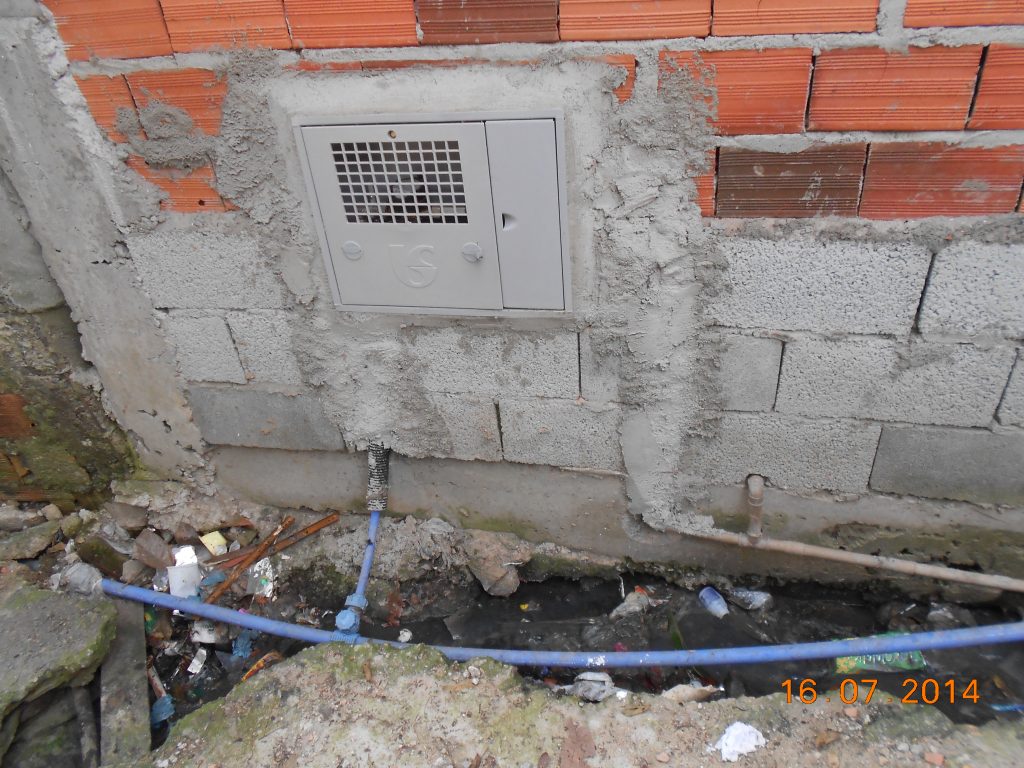
Irregular water connections going through waste
water areas in the Pedreira
This is what I mean when I say that what hasn’t been assessed hasn’t been managed.
The subsidies in São Paulo were not poorly conceived – the cross-subsidy logic is sound in theory, and the legal framework was explicit about who should benefit. What it could not guarantee was the monitoring infrastructure, the ground-level verification, and the institutional accountability that would have made those intentions operational. Compliance confirms a policy exists. It rarely confirms a policy works. Closing that distance – going beyond compliance to verify outcomes on the ground – is what makes intention operational.
What São Paulo gave me was not just a research finding. It was a clear-eyed view of the distance between what a policy is designed to do and what it actually delivers – and how much of that distance comes down to infrastructure no one had built to check.
Stephanie Leroux | Founder & Principal, WAVES Consulting Solutions
wavescs.com | sleroux@wavescs.com